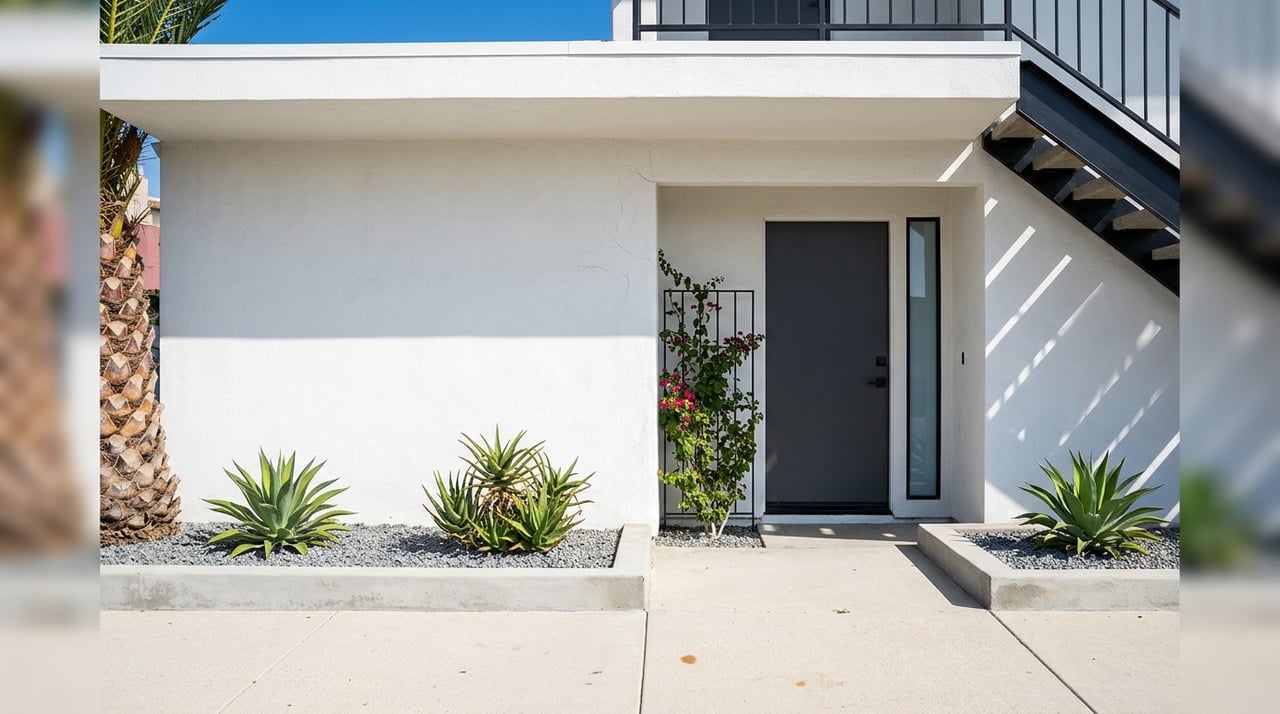
If you have spent any time looking at 4-to-12 unit deals in Southern California, you already know this: not every coastal market works well for small multifamily investors. Some cities are too expensive, too supply constrained, or too dependent on one demand driver. Long Beach stands out because it offers a different mix. You get a large renter base, a deep inventory of older multifamily buildings, and an economy that does not rely on just one industry. For investors who value durable demand and operational upside, that combination matters. Let’s dive in.
Long Beach has deep renter demand
Long Beach is a large, dense city with an estimated 450,469 residents as of July 1, 2025. It also has a population density of 9,203.6 people per square mile, which supports the kind of daily housing demand that small multifamily owners want to see.
The city’s housing profile also points to a strong rental market. In 2020 through 2024 ACS data, the owner-occupied housing rate was 41.2%, which means a large share of households rent rather than own. For investors, that creates a broad tenant base across many submarkets and building types.
Long Beach also shows signs of long-term housing pressure. In the city’s 2024 housing application, officials noted that population growth since 1990 outpaced housing-unit growth. That does not guarantee rapid rent growth every year, but it does support the idea of ongoing demand for existing rental housing.
Rents remain active, not overheated
One reason Long Beach draws attention is that it sits in a useful middle ground. According to Apartment List’s July 2026 report, the city’s median rent was $1,787, up 0.7% month over month and 0.1% year over year.
That tells you two things. First, the market is active. Second, it is not behaving like a runaway pricing environment where underwriting depends on aggressive future rent assumptions.
Long Beach also compares favorably within the region. Apartment List reported that local rents were 18.3% lower than the wider Los Angeles metro median of $2,189. For small investors, that relative affordability can support demand from renters who want access to a coastal city within the larger metro but may be priced out of more expensive pockets.
The city has a broad economic base
A healthy small multifamily market usually needs more than location appeal. It also needs a range of employment drivers that can support leasing across different market conditions.
Long Beach checks that box. The city’s Grow Long Beach initiative highlights aerospace and aviation, transportation and logistics, the creative economy, tourism and hospitality, healthcare, and education as priority sectors.
The Port of Long Beach is a major part of that picture. City leadership says the port supports about 51,000 local jobs and roughly $200 billion of cargo annually. That is a meaningful local employment anchor, but it is not the only one.
For investors, this matters because renter demand is less tied to one narrow industry. A market supported by logistics, healthcare, education, tourism, and aerospace can attract different types of tenants and help spread risk across the local economy.
Long Beach is built for small multifamily
This is one of the biggest reasons Long Beach draws small-asset investors. The city’s own housing data shows that multifamily is not a niche product here. It is a major part of the housing stock.
In its 2024 housing application, Long Beach reported 169,958 total housing units, including 101,066 multifamily units. That means multifamily makes up 59% of the city’s housing stock.
For buyers focused on apartments, that matters because it creates a deeper field of investable properties than you often find in markets dominated by single-family homes. In practical terms, Long Beach has the kind of housing mix that naturally supports 3-to-12 unit ownership, neighborhood-by-neighborhood deal flow, and repeat investor activity.
Older inventory creates value-add potential
Long Beach is not mainly a brand-new apartment market. It is a market with aging stock, and that often creates the kind of opportunity small multifamily buyers look for.
The city reported that 90,042 multifamily units, or 89% of its multifamily stock, were built before 1990. It also said that more than 80% of all housing units citywide were more than 50 years old.
That age profile shapes the investment thesis. Many investors are not buying polished, institutional product here. They are often evaluating older low-rise or mid-rise buildings where deferred maintenance, unit upgrades, and better operations can have a real effect on income and value.
That does not make every deal a value-add deal, of course. But it does mean Long Beach offers the kind of inventory where disciplined underwriting and renovation planning can matter more than chasing flashy new construction.
Submarket variety supports deal selection
Long Beach is not a one-note market. The city said its majority-multifamily census tracts are concentrated in the North, Downtown, East, and Southeast subregions, and that most of those units are at least 30 years old.
For investors, this creates a wider menu of property types and operating profiles. Some assets may lean more toward stable in-place income. Others may offer repositioning potential through interior renovations, exterior improvements, or expense management.
That variety can be especially useful for buyers trying to match deals to a specific strategy. Whether you are seeking a steadier hold, a value-play, or a 1031 replacement property with clear income characteristics, Long Beach gives you more than one lane to explore.
Supply is growing, but older housing still matters
It is important to look at the future pipeline too. Long Beach’s 2021 through 2029 Housing Element says the city needs 26,502 new housing units in its sixth-cycle RHNA, with nearly 60% of that allocation affordable.
The city also reported that it approved entitlements for 5,210 units from January 1, 2023 through November 30, 2025, and that housing starts reached 1,704 in 2024. That shows real development activity, not just planning language.
Still, new construction does not erase the importance of existing stock. The city’s housing corporation also says it can help acquire and rehabilitate existing multifamily rental housing to add affordability restrictions. That reinforces a key point for investors: preservation and rehabilitation remain central to Long Beach’s housing landscape.
Operations matter more than big rent jumps
Long Beach can be attractive, but it is not a market where you should rely on aggressive rent growth to make a deal work. The local operating framework pushes investors to focus on execution.
The city’s tenant-landlord guidance says just-cause protections apply to most rental properties after 12 months of lawful occupancy, though several property categories are exempt. Long Beach also states that for no-fault terminations, tenants are generally entitled to relocation assistance equal to one month of rent, while demolitions or substantial remodels trigger $4,500 or two months of rent, whichever is greater.
At the state level, California’s AB 1482 caps annual rent increases at 5% plus CPI, or 10%, whichever is lower, for most covered properties. The Long Beach Housing Authority’s July 2026 guidance says the 2026 calculation reaches 8.8% effective August 1, 2026.
For small multifamily owners, the takeaway is simple. Your returns are often shaped more by your entry basis, renovation budget, turnover timing, and day-to-day expense control than by outsized annual rent increases.
Why this appeals to small investors
Small multifamily investors often want markets where they can still create value through judgment and discipline. Long Beach fits that profile well.
You are looking at a city with broad renter demand, a large base of multifamily housing, and a sizable share of older buildings that may benefit from upgrades or tighter operations. At the same time, the local and state rules mean you need to underwrite carefully and plan around tenant protections from day one.
That tends to attract buyers who are realistic, data-driven, and focused on execution. In other words, Long Beach is often less about speculation and more about buying the right building at the right basis and operating it well.
What to watch before you buy
If you are considering a small multifamily investment in Long Beach, keep your focus on a few core items:
- Property age and condition: Older stock can create upside, but deferred maintenance can quickly change your numbers.
- Tenant status and turnover assumptions: Existing occupancy, length of tenancy, and renovation timing matter in a just-cause environment.
- Rent cap exposure: Covered properties require realistic rent-growth assumptions.
- Submarket fit: North, Downtown, East, and Southeast areas may offer different building profiles and operating patterns.
- Basis and expense load: In a more operations-driven market, your purchase price and controllable expenses carry a lot of weight.
These are not minor details. In a city like Long Beach, they are often the difference between a clean, durable investment and a deal that looks better on paper than it performs in practice.
The bottom line on Long Beach multifamily
Long Beach draws small multifamily investors because it offers something increasingly hard to find in coastal Southern California: scale, renter depth, and real small-asset inventory. The city has the density and economic diversity to support leasing demand, while its older housing stock creates room for hands-on investors to add value through smarter operations and selective upgrades.
That said, this is a market that rewards discipline. If you understand basis, building condition, tenant rules, and realistic renovation economics, Long Beach can offer compelling opportunities for 3-to-12 unit buyers, sellers, and 1031 exchange investors alike.
If you are evaluating a Long Beach apartment building, planning a sale, or working through a 1031 timeline, Jack McCann can help you assess the asset, position it for the market, and move with a clear investor-first strategy.
FAQs
Why do small multifamily investors target Long Beach?
- Long Beach offers a large renter base, a housing stock that is 59% multifamily, and a broad local economy supported by logistics, healthcare, education, tourism, and aerospace.
What kind of multifamily buildings are common in Long Beach?
- City housing data suggests much of the market consists of older multifamily properties, with 89% of multifamily units built before 1990.
Are Long Beach rents still growing?
- Apartment List reported a median rent of $1,787 in July 2026, with rents up 0.7% month over month and 0.1% year over year, which suggests an active but not overheated market.
What regulations should Long Beach multifamily buyers review?
- Buyers should review Long Beach just-cause rules, relocation assistance requirements for certain no-fault terminations, and California AB 1482 rent cap rules that apply to many covered properties.
Why does older housing stock matter in Long Beach investing?
- Older buildings can create opportunities for upgrades and better operations, but they also require careful review of maintenance needs, renovation costs, and tenant planning.
Is Long Beach a good market for 1031 exchange buyers?
- Long Beach can appeal to 1031 buyers because it offers a large pool of multifamily properties, varied submarkets, and investment opportunities across small apartment and mixed-use asset types.