If you own an older garden apartment building in Torrance, you are probably asking a simple question: where should you spend money to create real value, not just prettier units? In a market where rents remain relatively high, vacancy in the South Bay stayed at 4.5% at the end of 2025, and new supply is still coming online, the right answer is not a full luxury overhaul in every case. The better path is usually a focused value-add plan that improves rent potential, operating performance, and buyer appeal at the same time. Let’s dive in.
Why Torrance value-add still works
Torrance remains part of an expensive South Bay rental market, even if published rent averages differ by source. Apartments.com reports average rent at $2,037, while RentCafe places it higher, and broader South Bay asking rents averaged $2,321 at year-end 2025 according to Northmarq’s Los Angeles multifamily report. The key takeaway is that renter demand has stayed durable enough to support thoughtful upgrades.
That does not mean every renovation pencils. South Bay deliveries increased in 2025, with more than 1,100 units scheduled for 2026, so owners cannot assume renters will pay more for dated product forever. At the same time, USC Lusk’s forecast points to continued countywide undersupply and rent growth through 2027, which supports selective improvements at older properties.
Start with the best-return upgrades
For older Torrance garden apartments, interior unit renovations remain the clearest value-add lever. According to MAA’s 2026 redevelopment guidance filed with the SEC, standard renovation packages costing about $6,600 to $7,600 per unit produced average rent increases of 7% to 9% and annualized cash returns of 18.5% to 19.5%.
That same guidance also showed renovated units leasing about 11 days faster than non-renovated units. Faster leasing matters because reduced downtime supports NOI just as much as higher asking rent. In a market where buyers are scrutinizing stabilized cash flow, that kind of operating improvement can be as important as the headline rent bump.
Focus on kitchens and baths first
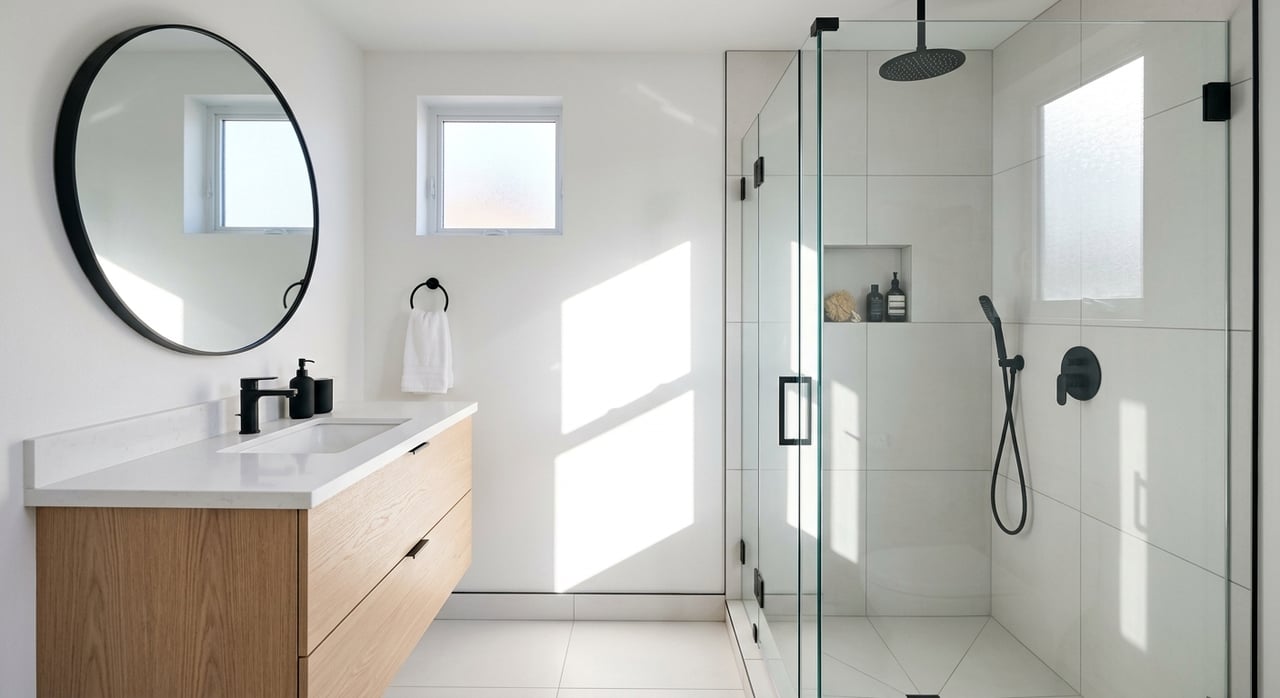
The strongest interior upgrades are usually the least flashy ones. Multi-Housing News reports that kitchen and bath updates, flooring, light fixtures, appliances, and washer/dryer installs tend to deliver returns in the mid-teens, with updated kitchens and bathrooms often adding the most value.
For many 1960s-era Torrance garden properties, that supports a practical turn strategy such as:
- Durable-surface countertops
- Refreshed cabinet faces or hardware
- Modern lighting and plumbing fixtures
- Hard-surface flooring
- Water-efficient fixtures
- ENERGY STAR appliances
- In-unit laundry where layout and infrastructure allow
This approach usually makes more sense than chasing a luxury finish package that overshoots the likely renter profile.
Do not ignore maintenance savings
Cosmetic upgrades are only part of the story. The same Multi-Housing News renovation coverage notes that updated kitchens and bathrooms can also reduce maintenance requests. That matters because the most durable value-add programs improve both revenue and expense control.
If you are deciding where to invest, that is a good filter to use. Ask which improvements raise rent and reduce future calls, turns, or replacements.
Prioritize features renters clearly want
Older garden apartments often have limited room for major common-area expansion, so it helps to focus on features renters already prioritize. Zillow listing analysis, cited by Multifamily Executive, found that off-street parking listings received 85% more saves and 103% more shares per day, while in-unit laundry generated 78% more saves and 92% more shares.
That kind of renter behavior is hard to ignore. If your Torrance property can improve parking layout, assignment, or laundry access, those may be more valuable than adding trend-driven amenities with weaker day-to-day impact.
Parking is a value-add category
Parking is often under-monetized at older properties. In a garden-style asset, low-cost site-plan changes can sometimes create meaningful upside, including:
- Re-striping for more efficient space use
- Reserved or assigned parking programs
- Covered parking upgrades
- Secure gated access
- EV charging where feasible
Greystar’s renter survey also places reserved parking, extra storage, and secure access in a higher-priority and higher-premium group. For Torrance owners, that suggests practical site improvements may outperform expensive amenity projects.
Control utilities the right way
If you own an older apartment building, operating costs can quietly erode value faster than many owners expect. Water, sewer, common-area electric, and lighting are often where simple improvements can produce measurable savings.
Multi-Housing News reports that one repositioning achieved $54,000 in annual water and sewer savings, or 18%, through smart water submeters and saw lighting energy fall 22% after LED retrofits. The same article notes that straightforward water and lighting retrofits can outperform more complex energy projects on payback speed.
Follow California billing rules carefully
Utility recovery can help, but California compliance matters. Under California Civil Code Section 1954.204, owners must provide advance written disclosure before separately billing tenants for water, along with itemized billing and required notice about charge calculations.
The same general principle applies to master-meter gas and electric billing under California utility rules. In practice, that means utility recovery needs to match the lease structure, disclosure requirements, and billing standards. For older Torrance assets, a legal and operational review should come before any rollout.
Refresh curb appeal without overspending
Not every value-add dollar belongs inside the unit. First impressions still affect leasing momentum, perceived property quality, and buyer confidence, especially for small-to-mid multifamily buildings where deferred maintenance is easy to spot.
According to Multi-Housing News, life-safety and infrastructure come first, but curb appeal still matters. Clean entries, fresh paint, repaired sidewalks, low-water landscaping, and upgraded lighting can improve leasing performance without the cost of a full repositioning.
Add selective amenities, not everything
Common-area upgrades work best when they solve a specific friction point. Based on renter-demand research from Greystar and Multifamily Executive, a few selective additions may make sense after the basics are covered, such as:
- Secure package lockers
- A small dog area
- Outdoor seating or BBQ space
- Outdoor Wi-Fi
- Additional storage outside the unit
For a 1960s Torrance garden property, those kinds of updates are usually easier to defend than a costly luxury amenity package.
Understand the cap-rate math
A renovation plan is only as strong as the exit math behind it. In the South Bay, Northmarq reports an average 2025 cap rate of about 5.75%.
Using that benchmark, every $50 per month per unit in incremental annual NOI is worth about $10,400 per unit. Every $100 per month per unit is worth about $20,900 per unit, and every $150 per month per unit is worth about $31,300 per unit.
If exit cap rates move out to 6.25%, those value gains compress to about $9,600, $19,200, and $28,800 per unit. That is why your underwriting should focus on durable NOI, not just optimistic rent growth.
Durable NOI beats cosmetic NOI
Cap rates today are already above the roughly 3.5% to 4.5% range the market saw from 2020 through 2023, according to Northmarq. Buyers are more cautious now, especially with older Class C product.
That means the strongest value-add story is usually one that includes:
- Proven rent lift
- Lower turnover or faster leasing
- Reduced maintenance calls
- Better utility control
- Cleaner site presentation
Those are easier for buyers to underwrite than cosmetic upgrades alone.
Renovate, refinance, or sell?
If you own an older Torrance garden apartment building, the right next move depends on how much upside is still in the property and how much systems work remains. In many cases, the answer is not all-or-nothing.
Renovate when the gap is visible
Renovation makes the most sense when your units are clearly behind the local comp set on kitchens, baths, flooring, parking, laundry, or utility setup. If expected rent lift, expense savings, and turnover reduction can clear your capex at a realistic exit cap, the case is stronger.
This is especially true for phased upgrades completed on turnover. That approach reduces disruption and lets you test what the market will actually pay.
Refinance when NOI is already improving
Refinancing can make sense when your property is structurally sound and your operating numbers are already moving in the right direction. If the renovation work is showing up in stronger collections, lower expenses, or better occupancy, that value creation may be easier to capture in updated appraisal and debt terms.
Sell when deferred maintenance is too heavy
Selling may be the smarter move when the building needs more systems work than the market is likely to reward. In the South Bay, 2025 transactions were largely Class C assets from the 1960s, and buyers are likely to separate well-executed value-add properties from buildings with significant deferred maintenance, based on Northmarq’s transaction commentary.
If your building has operational upside but also major capital needs, an investor-focused sale process with clear financial packaging may produce a better outcome than starting a renovation program you do not want to finish.
A smart sequence for Torrance owners
For many older Torrance garden apartments, the most practical path is a phased plan. Start with life-safety items, utility controls, lighting, and curb appeal. Then renovate units on turnover, and after that, look at parking monetization and a small number of targeted amenities.
That sequence fits current renter preferences and the South Bay transaction environment. It also helps you protect capital by investing in changes that improve the day-to-day performance of the property before moving into lower-priority upgrades.
If you are weighing whether to renovate, refinance, or sell an older Torrance apartment asset, working from actual NOI impact and buyer expectations is critical. Jack McCann with helps owners evaluate multifamily properties with a clear, investor-focused lens, whether you are planning a value-add strategy, preparing for a sale, or considering a 1031 exchange.
FAQs
What value-add upgrades work best for older Torrance garden apartments?
- The strongest options are usually unit interior improvements like kitchen and bath updates, hard-surface flooring, modern fixtures, appliances, and in-unit laundry where feasible, plus practical site upgrades like parking improvements and secure access.
How much can apartment renovations add to value in the South Bay?
- Based on a 5.75% cap rate from Northmarq, every $100 per month per unit in added annual NOI may translate to roughly $20,900 in value per unit, assuming the income increase is durable.
Are parking and laundry important for Torrance apartment renters?
- Yes. Zillow listing analysis cited by Multifamily Executive found that off-street parking and in-unit laundry were among the most in-demand rental features, generating significantly more saves and shares.
Can Torrance apartment owners bill tenants separately for water?
- Yes, but only if the billing structure follows California rules, including advance written disclosure, itemized billing, and proper notice of how charges are calculated.
Should you renovate or sell an older Torrance apartment building?
- It depends on the building’s condition, the cost of needed work, and whether expected NOI gains will justify the investment. If deferred maintenance is too heavy, selling may be the better option. If the property has clear operational upside, a phased renovation plan may create more value first.